
Updated · GetClinicTurkey Editorial · General planning information, not personal medical advice.
A snap-on denture suits you if you want implants to hold a denture firmly but still want to take it out to clean, need the denture to support your lips, or want fewer implants and simpler surgery. A fixed full-arch bridge such as All-on-4 suits you if you want teeth that never come out at home and can keep up a more demanding cleaning routine. Both are recognised treatments, and a 2026 global consensus on the toothless upper jaw recommends that clinics offer both. For All-on-4 itself, see our All-on-4 in Turkey guide.
- Snap-on denture (implant overdenture): clips onto two or more implants and comes out for cleaning. Lower jaw: a two-implant overdenture is the consensus standard of care (McGill 2002, York 2009). Upper jaw: at least four implants suggested.
- All-on-4 or All-on-6: a bridge fixed to the implants that only a dentist can remove.
- Trade-off: the overdenture is easier to clean and needs simpler surgery but has clips that wear; the fixed bridge stays in but needs more cleaning effort and more surgery.
- Ask for both options in an itemised written quote before you choose.
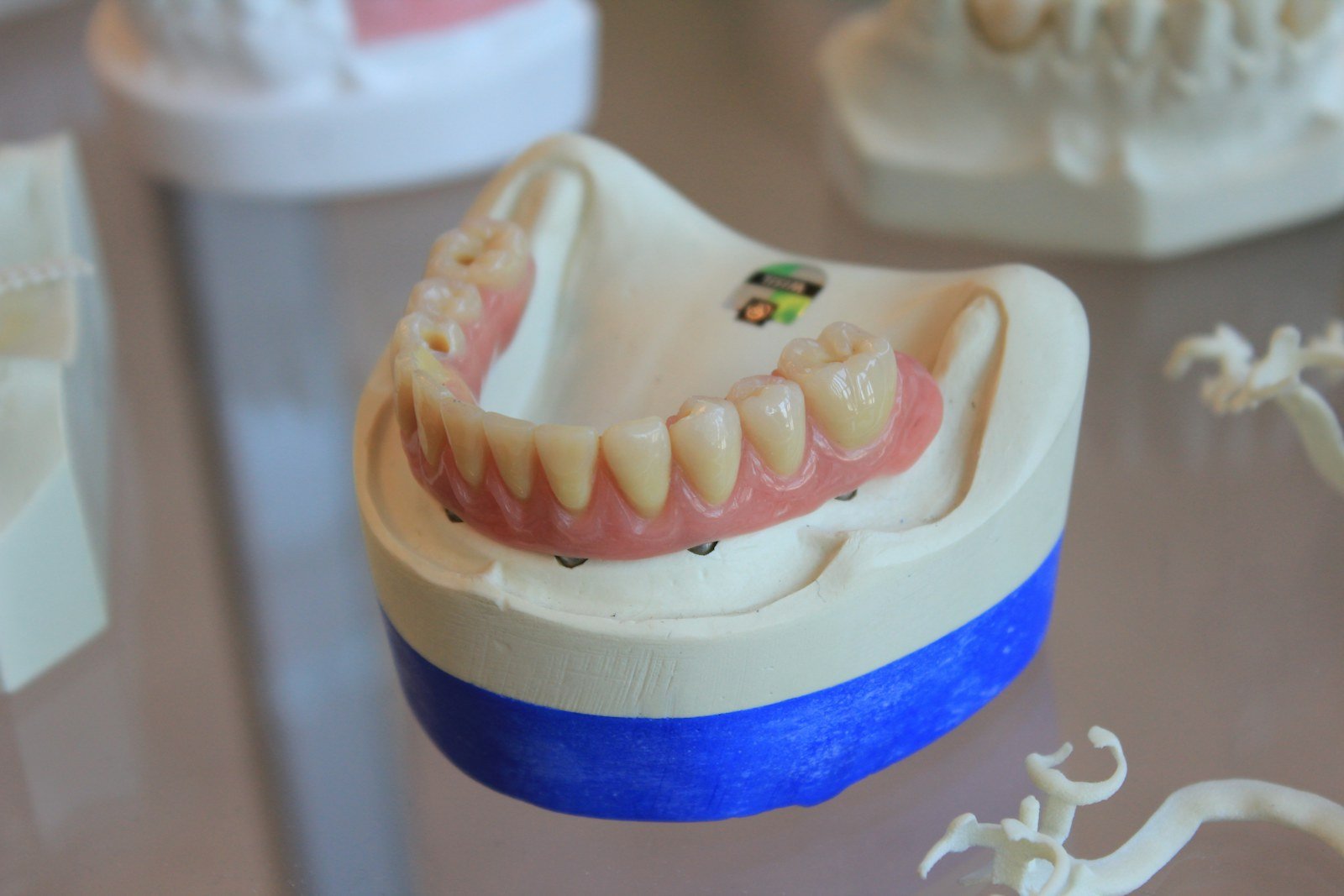
What is a snap-on denture?
“Snap-on denture” is a patient term. Dentists call it an implant overdenture: a full denture with retention parts on its underside that clip onto implants in the jaw. The connection can be individual studs (ball or cylindrical attachments), a bar joining the implants, or telescopic crowns. How much the denture also rests on the gums depends on the number and position of the implants (2026 consensus, Group 4).
The All-on-4 and All-on-6 approaches are different: a full-arch bridge is fixed to the implants and relies on them alone. You cannot take it out.
Do not confuse either with Snap-On Smile, a removable cosmetic arch that clips over your own teeth and is not held by implants.
Snap-on denture vs All-on-4 at a glance
| Snap-on denture (implant overdenture) | Fixed full arch (All-on-4 or All-on-6) | |
|---|---|---|
| Who takes it out | You, every day, to clean it | Only a dentist |
| Implants per jaw | Lower jaw: a two-implant overdenture is the consensus standard of care (McGill 2002, York 2009). Upper jaw: at least four suggested | Four in All-on-4. For the upper jaw, the 2026 consensus says at least four and suggests six |
| Daily cleaning | Brush the denture out of the mouth and clean around the attachments | Clean around and under the bridge with interdental brushes, floss or a water flosser |
| Parts that wear | Retention inserts lose grip and need reactivating or replacing | Screws can loosen or break; the veneering material can chip |
| Lip and face support | A denture flange can rebuild lip support where bone is lost | No flange, so it cannot add lip support in the same way |
| Surgery | Fewer implants, less complex | More implants, more complex, longer treatment |
| Turkey planning price, per jaw | Prices vary with the attachment system and implant count, so ask for an itemised quote | €2,500–4,500 for All-on-4 (details) |
The All-on-4 figure is a planning range, not a quote. Overdenture prices vary with the attachment system and implant count, so ask for an itemised quote in writing. For single implants, see our 2026 implant price guide.
What the consensus statements say
Lower jaw. The 2002 McGill consensus statement is titled “Mandibular two-implant overdentures as first choice standard of care for edentulous patients“. The British Society for the Study of Prosthetic Dentistry followed it with the York Consensus Statement in 2009, which concluded that “a two-implant supported mandibular overdenture should be the minimum offered to edentulous patients as a first choice of treatment”. Both statements compare overdentures with conventional dentures, not with fixed bridges.
Upper jaw. The evidence is different. A 2014 systematic review found more implant loss when four or fewer implants were used with unsplinted attachments. In 2026, the first Global Consensus for Clinical Guidelines on the edentulous upper jaw recommended that both removable overdentures and fixed prostheses are offered, so patients can make an informed decision (98% agreement). It suggested at least four implants for an overdenture, and at least four, preferably six, for a fixed bridge (Group 1, Recommendations 1, 4 and 5).
Fixed or removable? A 2018 systematic review of patient-reported outcomes found no significant difference overall between fixed and removable implant prostheses, with a slight trend in favour of fixed and conflicting results for chewing, speech and appearance. In the 2026 consensus surveys, 83% of patients preferred a fixed upper arch. Yet in a small crossover trial cited by the consensus, nine patients chose to keep the removable prosthesis and four the fixed one. Personal choice matters.
Implant survival is high with both. A 2016 meta-analysis found implants under fixed restorations were lost slightly less often than under overdentures (0.23 vs 0.35 per 100 implant-years), and more often in the upper jaw than the lower.
Daily cleaning compared
The Group 4 consensus report states that, compared with a fixed full-arch prosthesis, an overdenture “is less costly, requires fewer implants, involves less complex surgery, is easier to clean and offers more options for prosthetic design”. In an ITI consensus report, patients rated their ability to maintain their oral hygiene significantly higher with removable prostheses.
With a snap-on denture
You take the denture out, brush it and clean the implant attachments in your mouth. The NHS denture advice applies to the denture itself: brush it morning and evening, clean it over a sink filled with water or a towel because it can break if dropped, and do not use toothpaste on it. The NHS also advises against wearing dentures overnight unless your dentist recommends it, so ask what applies to your overdenture.
With All-on-4 or All-on-6
The bridge stays in, so you clean around and under it in your mouth. In the 2026 consensus surveys, experts most often recommended super floss, interdental brushes, electric toothbrushes and water flossers, and the consensus suggests cleaning at least twice a day. A fixed bridge has no flange, because a flange would block cleaning, and the consensus calls its hygiene protocol “more demanding”. It recommends a screw-retained bridge so the dentist can remove it, and contours that allow cleaning (Recommendations 9 and 14).
Maintenance: parts that wear
Overdentures. A 2022 systematic review of lower-jaw overdentures found that loss of retention, caused by wear of the retention parts, is the most common reason for maintenance, which means reactivating or replacing them. Plastic parts wore faster than metal ones, but the maintenance rate was similar. For upper overdentures, 89% of experts surveyed in 2026 estimated that retention parts need replacing within five years, with wide variation between patients (Group 1, Recommendation 12). A 2010 review found more prosthetic complications with upper than with lower overdentures.
Fixed bridges. A 2012 systematic review of fixed full-arch prostheses followed for at least five years found that only 29.3% were free of any complication after five years. Chipping or fracture of the veneering material was the most common technical problem with the bridge itself, and screw fracture the most common technical problem involving the implants; peri-implant bone loss was the most common biological one. These need not mean the bridge fails, but they cost repair time and money. The review is from 2012, and the bridge material matters, as our dental implants in Turkey guide explains. The 2026 consensus also suggests a night guard for fixed upper bridges, especially if you grind your teeth.
Which suits you?
A snap-on denture may suit you if:
- you want implant support with fewer implants and less complex surgery;
- you have lost a lot of bone and need a flange to support your lips and face, or to help your speech;
- you want to take the teeth out to clean them, or cleaning under a fixed bridge would be hard for you;
- you can have the retention parts serviced by a dentist near home.
A fixed full-arch bridge may suit you if:
- you do not want teeth that come out at home;
- your bone allows the implants needed, or you accept more surgery such as a bone graft;
- you can clean under the bridge every day and attend regular maintenance visits.
Sometimes the honest answer is neither. The 2026 consensus states that if you are satisfied with how your upper complete denture fits and works, and the tissues under it are healthy, no further treatment is needed apart from routine maintenance (Group 4, Recommendation 4).
Planning it in Turkey: what to ask the clinic
Ask for these in writing before you pay a deposit:
- Both options, priced separately. An overdenture and a fixed bridge for each jaw you need, with the reasons the dentist recommends one.
- The number of implants per jaw, with the implant brand, diameter and length. If a quote mentions mini implants, ask the diameter: an ITI consensus found implants narrower than 2.5 mm had lower survival rates than standard implants.
- For an overdenture: the attachment type (studs, bar or telescopic crowns) and brand, spare retention inserts, and whether a dentist at home can get the same parts.
- For a fixed bridge: whether it is screw-retained, the material of the temporary and final bridge, and whether you will test a temporary bridge for cleaning, speech and appearance before the final one, as the consensus suggests (Recommendation 7).
- The schedule. How many trips, and when the final teeth are fitted. Our guide to one trip or two explains the healing timeline.
- Records and aftercare. Scans, implant details and who handles problems after you get home: see guarantees and aftercare.
To get a useful quote, send the clinic the right records (what to send), and run through our checks before a deposit.
Frequently asked questions
Are snap-on dentures better than All-on-4?
Neither is better for everyone. Patients rate both highly in studies. A snap-on denture (implant overdenture) usually needs fewer implants and simpler surgery, comes out for cleaning and can carry a flange that supports the lips. A fixed bridge such as All-on-4 never comes out at home, but cleaning is more demanding and treatment is more complex. Your bone, budget, hands and preferences decide it.
How many implants does a snap-on denture need?
For the lower jaw, the McGill (2002) consensus statement names a two-implant overdenture as the first-choice standard, and the York (2009) statement calls it the minimum to offer. For the upper jaw, a 2026 global consensus suggests at least four implants, spread out, to reduce implant failure.
Do snap-on dentures need maintenance?
Yes. The plastic or metal retention parts in the denture wear, and the most common maintenance is reactivating or replacing them. In a 2026 consensus survey, most experts estimated that retention parts on an upper overdenture need replacing within five years. Ask the clinic which attachment system it uses so a dentist at home can get the parts.
Is All-on-4 harder to clean than a snap-on denture?
Usually, yes. In an ITI consensus, patients rated their ability to keep their mouth clean significantly higher with removable implant prostheses. A fixed bridge stays in, so you clean around and under it with interdental brushes, floss or a water flosser.
Should a clinic offer me both options?
For a full upper arch, yes. The 2026 global consensus on the toothless upper jaw recommends that both removable implant overdentures and fixed prostheses are offered, so patients can make an informed decision. If a quote covers only All-on-4, ask why an overdenture is not suitable for you.
Sources
- Thomason JM et al. Mandibular two implant-supported overdentures as the first choice standard of care for edentulous patients: the York Consensus Statement. British Dental Journal 2009;207:185–186
- Feine JS et al. The McGill consensus statement on overdentures. Gerodontology 2002;19:3–4 (PubMed record)
- Donos N et al. Consensus Report of Group 1 of the 1st Global Consensus for Clinical Guidelines for the Rehabilitation of the Edentulous Maxilla. Clinical Oral Implants Research 2026;37(Suppl 30):S28–S48
- Stilwell C et al. Consensus Report of Group 4 of the 1st Global Consensus for Clinical Guidelines for the Rehabilitation of the Edentulous Maxilla: Conventional Dentures, Implant Overdentures and Implant-Supported Fixed Dental Prostheses. Clinical Oral Implants Research 2026;37(Suppl 30):S81–S107
- Feine J et al. Group 3 ITI Consensus Report: Patient-reported outcome measures associated with implant dentistry. Clinical Oral Implants Research 2018;29(Suppl 16):270–275
- Yao CJ et al. Patient-reported outcome measures of edentulous patients restored with implant-supported removable and fixed prostheses: a systematic review. Clinical Oral Implants Research 2018;29(Suppl 16):241–254
- Kern JS et al. A systematic review and meta-analysis of removable and fixed implant-supported prostheses in edentulous jaws: post-loading implant loss. Clinical Oral Implants Research 2016;27:174–195
- Papaspyridakos P et al. A systematic review of biologic and technical complications with fixed implant rehabilitations for edentulous patients. Int J Oral Maxillofac Implants 2012;27:102–110
- Andreiotelli M et al. Prosthodontic complications with implant overdentures: a systematic literature review. International Journal of Prosthodontics 2010;23:195–203
- Raghoebar GM et al. A systematic review of implant-supported overdentures in the edentulous maxilla, compared to the mandible: how many implants? European Journal of Oral Implantology 2014;7(Suppl 2):S191–S201
- Wakam R et al. Evaluation of retention, wear, and maintenance of attachment systems for single- or two-implant-retained mandibular overdentures: a systematic review. Materials 2022;15:1933
- Jung RE et al. Group 1 ITI Consensus Report: The influence of implant length and design and medications on clinical and patient-reported outcomes. Clinical Oral Implants Research 2018;29(Suppl 16):69–77
- NHS: Dentures (false teeth), page last reviewed 19 March 2025
Comparing full-arch options? See All-on-4 clinics in Istanbul, Antalya, İzmir and Muğla, and ask each one to quote an overdenture too. Or estimate your treatment cost.