
Updated · GetClinicTurkey Editorial · General information, not personal medical advice.
Zygomatic implants are extra-long dental implants, about 3 to 5 cm, that anchor in the cheekbone (zygoma) instead of the upper jawbone. They are for people who have lost so much bone in the upper jaw that standard implants cannot be held securely, usually as an alternative to major bone grafting. Most people with missing teeth do not need them, and the surgery is complex.
- What: long implants placed through or beside the sinus into the cheekbone, almost always supporting a fixed full-arch bridge.
- Who: people with no or few upper teeth and severe bone loss, after failed grafts or implants, or after upper-jaw surgery for a tumour.
- Versus grafting: in the only trial comparing them, teeth came far sooner and probably fewer implants failed, but complications were probably more common.
- Before you book: get the scan-based reason simpler options will not work, the surgeon, the facility and an itemised quote.
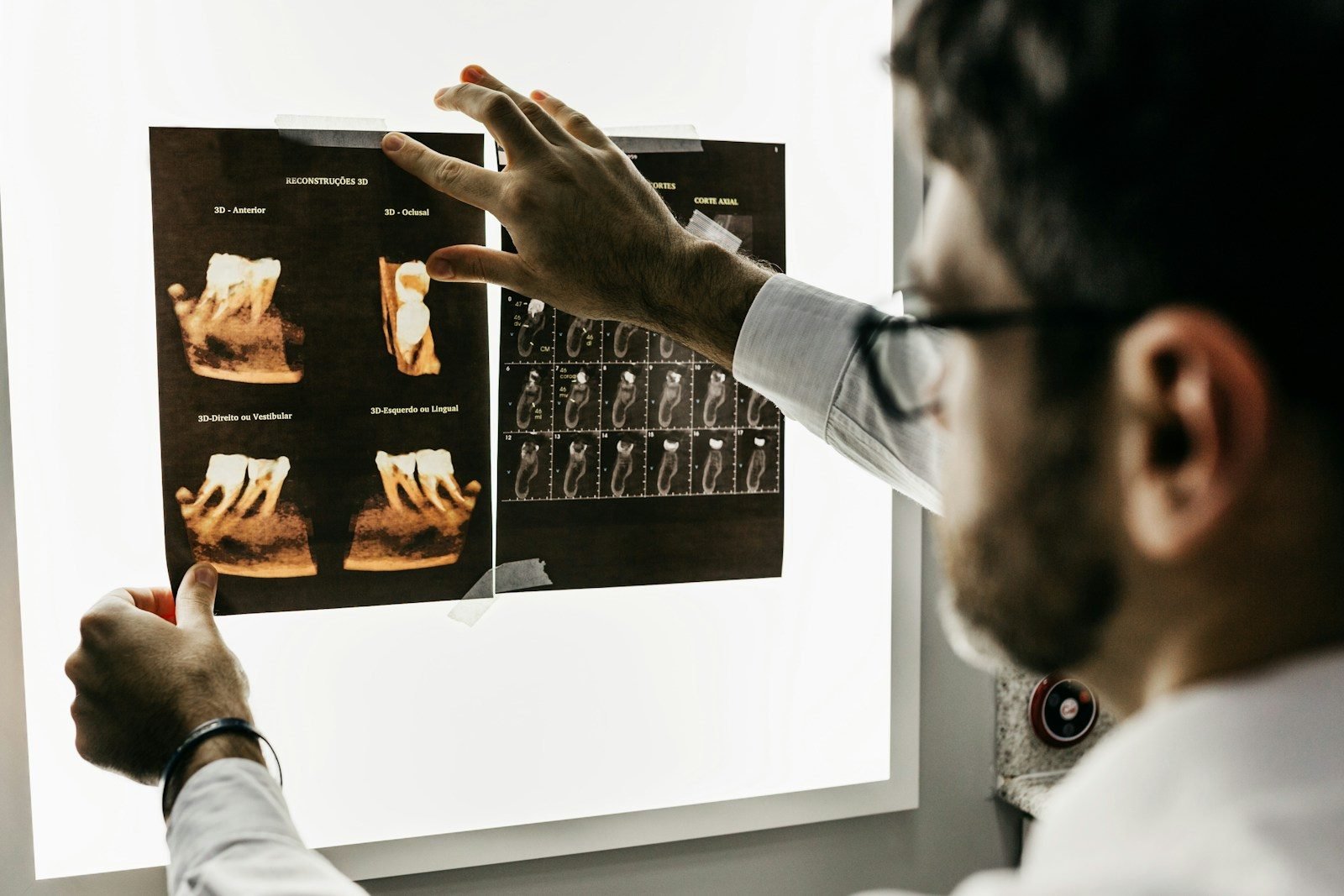
What zygomatic implants are
A zygomatic implant is much longer than a standard one, about 3 to 5 cm according to Cochrane, with products made in lengths from 30 to 52.5 mm (Ramezanzade et al., 2021). It runs from the back of the upper jaw, through the maxillary sinus or outside it, to engage the body of the cheekbone (Esposito and Worthington, 2013), using the stable bone there instead of the shrunken jaw (ITI consensus).
Zygomatic implants are used alone or together with standard implants at the front of the jaw. When conventional implants can be placed neither at the front nor at the back, two go on each side, called “quad zygoma” (ITI). Cochrane says cheekbone implants “almost always support fixed teeth, not removable dentures”, and that fixed teeth can often be fitted on the day of surgery because no grafting is needed first (Cochrane plain language summary).
When zygomatic implants come up
The 2023 consensus report of the International Team for Implantology (ITI) lists the reported reasons (ITI consensus):
- severe bone loss or deficiency in the upper jaw;
- previous bone grafts or implants that did not succeed;
- avoiding staged bone graft procedures;
- conditions that complicate grafting, such as cysts and trauma;
- partial or complete loss of the upper jaw after tumour surgery, trauma or a congenital defect.
The most cited bone-loss grades are Cawood and Howell classes IV to VI, and the ITI recommends discussing options, risks, treatment time and long-term results with each patient.
In the UK, NHS-funded implants are largely provided in hospitals (RCS England, 2019), where maxillofacial and restorative teams place zygomatic implants for patients who meet commissioning criteria (University Hospitals Dorset), for example after upper-jaw cancer surgery (Lancashire Teaching Hospitals).
Zygomatic implants, bone grafts and All-on-4 compared
Which option fits depends mainly on where the bone is missing:
| Option | How it gets support | When it is usually considered | Main trade-offs |
|---|---|---|---|
| Bone graft or sinus lift, then standard implants | Bone is rebuilt first, then standard implants | Bone loss that can be rebuilt; a longer, staged plan is acceptable | Extra surgery and a much longer wait for teeth. Grafts and sinus lifts |
| All-on-4 or All-on-6 (tilted implants) | Standard implants, back ones tilted, in the remaining jawbone | Enough bone remains at the front of the upper jaw | Standard implant surgery; not possible if the front is also too thin. All-on-4, All-on-6 |
| Zygomatic implants (with standard implants at the front) | Long implants in the cheekbone, plus standard implants at the front | Too little bone at the back; grafting not wanted, failed or not feasible | No major grafting and faster teeth, but complex surgery with more complications |
| Quad zygoma (four zygomatic implants) | Two zygomatic implants each side | Conventional implants possible neither at the front nor at the back; grafting not an option | All implants should be joined (splinted) by the bridge |
A 2026 review notes that not all thin upper jaws need zygomatic implants: where bone remains, short or tilted implants, a sinus lift or bone regeneration may still work. Zygomatic implants are most often combined with standard front implants when some front bone remains; extensive loss at both the front and the back may require quad zygoma (Acerra et al., 2026). For grafting and sinus lifts in detail, see do you need a bone graft for dental implants?
What the trial evidence says. The 2026 Cochrane review found only two randomised trials. One, with 71 people, compared zygomatic implants with standard implants in grafted bone. After three years, zygomatic implants “probably reduce implant failures and probably increase the risk of complications”, and time to new teeth was about 1.3 days against 444 days with grafting. In plain terms, roughly four-fifths of people with cheekbone implants had complications, against about half with grafting. Cochrane rates the evidence moderate to low certainty, because the trials were small (Visconti et al., 2026; plain language summary).
Who may not be a candidate
No guideline gives a simple list, but the literature points to these groups:
- People with enough bone for simpler options (see above).
- Sinus problems: assessed first. The ITI recommends a CT or CBCT that includes the midface to assess bone volume and sinus health, and a preoperative evaluation for existing sinus disease (ITI consensus). Ask how any sinus problem you have will be handled.
- People who cannot have implant surgery in general. The usual reasons implant surgery is ruled out apply here too. A 2021 overview, discussing patients after upper-jaw resection, lists medically compromised patients, previous head and neck radiotherapy and the general contraindications of implant surgery as contraindications (Ramezanzade et al., 2021).
- People who have had head and neck radiotherapy: a specialist decision. Evidence is mixed: a 2026 review of cancer patients found rehabilitation “remains feasible after radiotherapy” and stressed multidisciplinary planning (Scocca and Dell’Aversana Orabona, 2026). That is a decision for a hospital head and neck team.
Risks you should know about
Survival means the implant is still in place, not that there were no problems.
- Survival. A 2016 review of 68 studies (4,556 implants) reported 95.21% cumulative survival at 12 years (Chrcanovic et al., 2016). A 2023 meta-analysis reported 96.2% at 6 years (Brennand Roper et al., 2023). These are averages from published studies, not a promise for any patient or clinic.
- Sinusitis. The most common complication, with reported rates from 2.4% in the 2016 review, whose authors say the figures “might be underestimated”, to 14.2% at five years in the 2023 meta-analysis. It “can appear several years after” surgery (Chrcanovic et al., 2016).
- Other problems reported in the ITI review: temporary numbness from the infraorbital nerve below the eye, openings between the mouth and sinus (oro-antral communication), gum recession or overgrowth around the implants, and rarely, implants entering the eye socket (four cases in three studies) (ITI consensus).
Who should do it, and where
The ITI consensus is direct: zygomatic implants “are considered a complex treatment. The success of the treatment is highly dependent on the clinician skill and experience”, and they need “surgical and restorative expertise” (ITI). A 2016 systematic review says the technique should be reserved for professionals “with vast surgical experience, as it requires a long learning curve and prior experience with conventional implants”, with sedation or, preferably, general anaesthesia (Molinero-Mourelle et al., 2016).
In Turkey: the specialist and the facility
In Turkey, oral and maxillofacial surgery (Ağız, Diş ve Çene Cerrahisi) is a dental specialty with four years of training (Law No. 1219, Annex 2), and the Ministry of Health’s core curriculum for that specialty lists zygomatic implants (TUKMOS curriculum). We found no Turkish rule that reserves zygomatic implants for one specialty, so ask who will operate and which specialist certificate they hold. A dentist may not present a certificate, master’s degree or doctorate as a specialist title (private dental facilities regulation, Article 19(10)).
The same regulation bars sedation and general anaesthesia in a dental private practice (muayenehane) or polyclinic (Articles 8(1)(d) and 9(1)(d)). Dental centres must have a general anaesthesia unit (Article 10(1)(c)); dentists from practices and polyclinics may operate under sedation or general anaesthesia only in a facility with such a unit, or in a private health facility outside the regulation such as a hospital (Article 19(2)). If a polyclinic quotes zygomatic implants under sedation, ask where the operation will happen. For international patients, that facility needs the Ministry’s health tourism authorisation (Regulation No. 32882, Article 5(1)).
Our checks before paying a deposit and Ministry licence check explain how to verify a clinic.
What to ask a clinic in Turkey before you accept a quote
Send your scans first (see what to send for a quote), then ask:
| Ask the clinic | Why it matters |
|---|---|
| Show me the CBCT measurements: why not standard implants, All-on-4 or a graft? | The answer should come from your scan, not a package. |
| Who will place the zygomatic implants? Name, specialty and how many they have placed | Experience matters (see above). Ask for a number. |
| Who designs the bridge, which implant system is used, and what are the temporary and final bridges made of? | The treatment needs surgical and restorative expertise (ITI). Any dentist who treats you later needs these names. |
| What anaesthesia, who gives it, and in which facility? | Sedation or general anaesthesia may be needed. Check the facility (see above). |
| Have my sinuses been checked, and what if I already have sinus problems? | The ITI recommends assessing sinus health on a scan first; sinusitis is the most common complication. |
| How many trips, how long must I stay, and when is the final bridge fitted? | Plans differ by clinic. |
| What happens if an implant fails or I get sinusitis after I return home? | Sinusitis can appear years later. Agree in writing who treats it, where, and who pays. |
On price: we publish no planning price for zygomatic implants. Ask for an itemised quote naming each implant, the bridge, anaesthesia and the facility. For standard implant prices, see our implant price guide.
Frequently asked questions
Who needs zygomatic implants?
People with no or few upper teeth whose upper jaw has lost so much bone that standard implants cannot be held securely, and for whom bone grafting is not wanted, has failed or is not feasible. They are also used after part of the upper jaw has been removed for a tumour. A 3D scan, not photographs, shows whether you are in this group.
Are zygomatic implants better than a bone graft?
Neither is better for everyone. In the only trial comparing them, summarised by Cochrane in 2026, zygomatic implants gave teeth far sooner and probably led to fewer implant failures, but probably caused more complications. The trials were small.
Are zygomatic implants the same as All-on-4?
No. All-on-4 uses four standard implants in the jawbone, with the back ones tilted. Zygomatic implants are much longer, anchor in the cheekbone and are considered when there is not enough jawbone for that approach.
What are the main risks of zygomatic implants?
Sinusitis is the most common complication and can appear years after surgery. Reviews also report temporary numbness below the eye, openings between the mouth and the sinus, gum problems around the implants and, rarely, an implant entering the eye socket.
Where can zygomatic surgery under sedation take place in Turkey?
Not in a dental private practice or polyclinic: Turkish regulation bars sedation and general anaesthesia there. It must happen in a facility with a general anaesthesia unit, such as a dental centre, or in a hospital, so ask for the facility’s name.
Sources
- Cochrane plain language summary: cheekbone dental implants for severe upper-jaw bone loss (evidence current to November 2025)
- Visconti et al. Zygomatic implants for the severely atrophic edentulous maxilla. Cochrane Database Syst Rev 2026; CD004151
- Esposito and Worthington. Dental implants in zygomatic bone. Cochrane Database Syst Rev 2013 (superseded; anatomical description only)
- Al-Nawas et al. ITI consensus report on zygomatic implants. Int J Implant Dent 2023
- Brennand Roper et al. Long-term outcomes with zygomatic implants: systematic review and meta-analysis. Int J Implant Dent 2023
- Chrcanovic et al. Survival and complications of zygomatic implants: updated systematic review. J Oral Maxillofac Surg 2016
- Ramezanzade et al. Zygomatic implants in atrophic maxilla: overview of systematic reviews. Maxillofac Plast Reconstr Surg 2021
- Molinero-Mourelle et al. Surgical complications in zygomatic implants: systematic review. Med Oral Patol Oral Cir Bucal 2016
- Acerra et al. Zygomatic implants for the atrophic maxilla: comprehensive review. Medicina 2026
- Scocca and Dell’Aversana Orabona. Zygomatic implants in head and neck cancer patients: systematic review. J Dent 2026
- RCS England FDS and Restorative Dentistry UK: standards of care for NHS-funded dental implant treatment (2019, PDF)
- University Hospitals Dorset NHS FT: oral and maxillofacial surgery
- Lancashire Teaching Hospitals NHS FT: first ZIP flap procedure (July 2024)
- Law No. 1219, Annex 2: dental specialties and training periods
- Ministry of Health (TUKMOS): oral and maxillofacial surgery core curriculum, v2.3 (PDF)
- Regulation on private oral and dental health facilities (RG 6 October 2022, No. 31975, consolidated, PDF)
- Regulation No. 32882 on international health tourism (RG 26 April 2025)
Comparing clinics? Every profile shows whether we found the clinic on the Ministry of Health authorisation list. Browse clinics, then ask the questions above before you pay anything.