
Updated · GetClinicTurkey Editorial · General planning information, not personal medical advice.
To check the implant brand in a Turkish dental quote, get the manufacturer and the exact implant system named in writing before you pay, then collect the product labels, and any implant card, after surgery. The labels carry the lot or serial number of the implant actually placed. A brand name is not a promise of a result. Its practical value is that a dentist at home can identify your implant and find compatible parts years later.
Our 12 questions to ask before a deposit already tell you to get the manufacturer and product line in writing. This guide covers what comes after that.
- Before you pay: the quote names the manufacturer and the system or product line, not just “German” or “premium”.
- On surgery day: ask for the product labels, which show the catalogue and lot or serial numbers.
- Before you fly home: ask for X-rays, notes saying which implant is in which position and any implant card.
- Regulatory status: check the product in EUDAMED, MHRA PARD or Turkey’s ÜTS search. None of them ranks brands or proves a result.
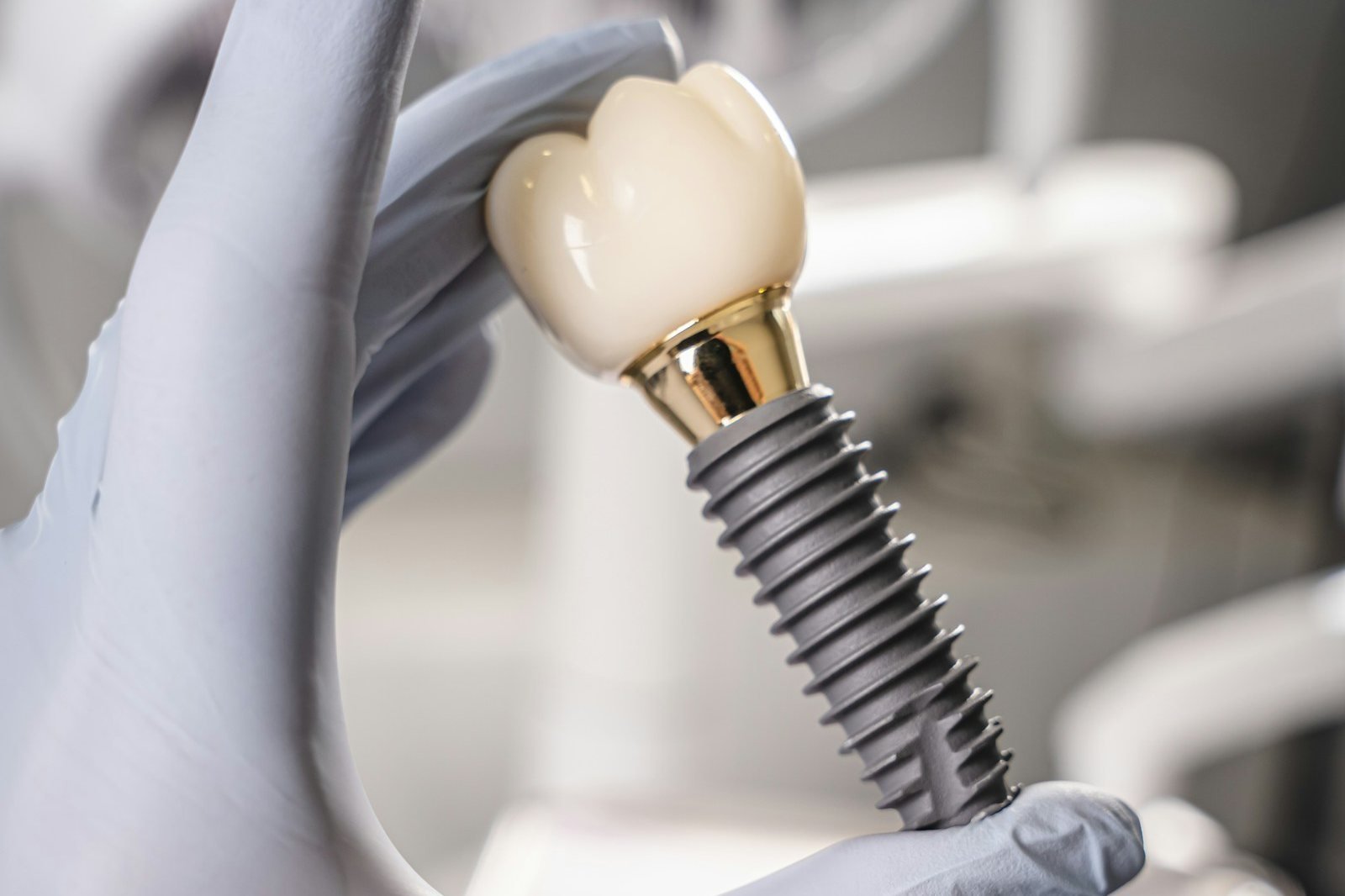
What a brand name in a quote does and does not tell you
A brand on a quote usually names a company. What you need is the specific implant system, because one manufacturer may sell several lines with different parts. Groups also own several brands. The Straumann Group’s 2025 annual report lists Anthogyr, Medentika, Neodent and Straumann among its brands, and Hiossen says it was established by its parent company Osstem in the US in 2006. A line such as “Straumann Group implant” or “Korean implant” does not tell you which product you are buying.
A brand also does not tell you how your treatment will go. A 2014 Cochrane review of randomised trials found “no evidence showing that any particular type of dental implant had superior long-term success”. Cochrane withdrew the review in 2019, noting it was out of date but correct when published, so treat it as dated evidence. A large Swedish population study of implants placed in 2003 reported differences in implant loss between implant brands, but the authors said the reasons were “not detectable” from their data. We do not rank brands, and we have not found evidence that would let anyone do so for your case.
We found no official statistics on which brands Turkish clinics use. The one peer-reviewed survey we found (Selcuk Dental Journal, 2021) offered 125 general dentists four named brands or “other”, and its authors note the small sample. Ask the clinic.
The paperwork that shows which implant you received
The quote tells you what was planned. The labels, and any implant card, tell you what was used. Ask for each one at the right moment:
| Document | When to get it | What it should show |
|---|---|---|
| Written quote | Before any deposit | Manufacturer, the implant system or product line, number of implants and their positions, and what goes on top (abutment and crown material) |
| Product labels | On the day of surgery | The stickers from the packaging: product name, catalogue (REF) number, size, lot (LOT) or serial number, and a UDI barcode where printed |
| Implant card | After surgery, if one is supplied | Device name and model, lot or serial number, UDI, the manufacturer’s name, address and website, plus your name, the clinic and the date |
| Clinical notes and X-rays | Before you fly home, and again after the final teeth | Which tooth position got which implant, the abutment and screw used, the crown or bridge material and any bone graft |
If the clinic needs to change the implant during surgery, ask for the change to be written into your notes. For what to send a clinic about implants you already have, see what to send for a dental quote.
What Turkish rules say about implant cards and tracking
Turkey’s Medical Device Regulation (Tıbbi Cihaz Yönetmeliği, Article 18), which follows the EU Medical Device Regulation, requires the maker of an implantable device to supply an implant card with the device name, serial or lot number, UDI, model and the manufacturer’s name, address and website. Health institutions must give patients who received the device that information together with an implant card that bears the patient’s identity. The Turkish text adds that the information is given in Turkish and, where necessary, in English.
Whether this applies to dental implants is disputed. The exemption list in the same article covers tooth crowns, dental fillings, braces, screws, pins and connectors. In a 2020 position paper, Team-NB, the association of European notified bodies, said dental implants and abutments “can be regarded as exempt”, treating the implant as a screw and the abutment as a connector. The Council of European Dentists notes that member states read the rule differently, citing Sweden’s medicines regulator treating dental implants as exempt, and calls it “best practice” for the dentist who places an implant to supply an implant card. The EU’s implant card guidance (MDCG 2019-8) does not address dental implants.
So an implant card is reasonable to ask for, but it may not be a legal requirement for your implant. The record to insist on is the product labels, with the lot or serial number and, where printed, the UDI.
Turkey also tracks medical devices in the Ministry’s Product Tracking System (ÜTS). Its user guide tells health facilities to file a use notification when a tracked product is used on a patient, and it accepts a passport number for identification. That record is kept in the Ministry’s system, not handed to you, so it does not replace your own labels. Anyone can, however, use the ÜTS public product search to check whether a product, searched by brand or barcode, is registered in Turkey.
Why the details matter once you are home
Implants are not one standard part. Researchers writing in Medicine (2020) estimate that “more than hundreds of manufacturers produce over 4000 different types of dental implant systems”. When a screw loosens or a crown breaks, the dentist needs parts that fit your system. Identifying it from an X-ray is hard: in a 2023 study in the Journal of Dental Research covering 25 implant types, dentists identified the system with a mean accuracy of 23.5%. Writing in the British Dental Journal, two UK dentists discussing implants placed abroad but not restored write: “It could be that we do not even recognise the implant system that has been used”.
This matters more because of who looks after you. The NHS says implants are “usually only available privately”. Under NHS England’s policy on self-funded treatment, the NHS will assess and stabilise a complication, but care it would not routinely fund is not usually offered or replaced afterwards. In a 2022 British Dental Association survey, dentists named crowns as the treatment most likely to need follow-up work, “closely followed by implants”. Ireland’s Dental Council suggests asking “Will I be given all my records after treatment?” The answer should be yes. See our guarantee and aftercare guide for who pays if something fails.
How to check a product’s regulatory status
These databases show whether a product may be sold in a market, not its quality or what was placed in you.
| Market | Where to look | What it tells you | What it does not tell you |
|---|---|---|---|
| EU (CE mark) | EUDAMED Actors and UDI/Devices search | Whether the manufacturer and device are registered in the EU database | A missing entry is not yet proof of a problem: devices already on the market have until 28 November 2026 |
| Great Britain | MHRA PARD | Whether the manufacturer has registered that type of device, and its brand or trade names, for the GB market | Whether a specific lot was placed in you |
| United States | FDA 510(k) database | Whether the FDA cleared that implant for sale in the US | Anything about the EU, UK or Turkish market |
| Turkey | ÜTS public product search | Whether the product is registered in Turkey’s Product Tracking System, with its class | Which product a clinic used on you |
- EU. Four EUDAMED modules, including device and certificate registration, became mandatory on 28 May 2026 (European Commission). The Commission’s timeline gives devices already on the market until 28 November 2026 to be registered, so the database is still filling up.
- Great Britain. Devices must be registered with the MHRA, and PARD lists the manufacturer, device types and brand or trade names. CE-marked devices can currently be placed on the GB market until 30 June 2028 or 30 June 2030, depending on the EU law they meet (GOV.UK). The government consulted in 2026 on recognising CE marks indefinitely and had not published an outcome when we checked.
- United States. Root-form dental implants are class II devices (21 CFR 872.3640) sold after 510(k) clearance. Under 21 CFR 807.97, clearance “does not in any way denote official approval”, so “FDA-approved” is the wrong term for an implant.
Questions to ask about the implant system
- Which system and line will you use for my case, and why that one?
- Will the abutment and crown come from the same maker or from another company, and will you name them?
- Will I get the product labels and, if the maker supplies one, an implant card?
- If you need to change the implant during surgery, will you tell me first and record it?
- Is the guarantee from the clinic or from the manufacturer, and what does it cover? (Compare with the deposit checklist.)
- Can a dentist in my home country get parts for this system? Check the maker’s distributors yourself, and ask your own dentist before you travel.
The system you choose can change the quote. We do not publish prices by brand; for planning ranges, see our 2026 dental implant price guide.
Frequently asked questions
Is there data on which implant brands Turkish clinics use?
We found no official statistics on implant brands in Turkey, and practice varies by clinic. The only peer-reviewed survey we found asked 125 Turkish general dentists to choose between four named brands or “other”, and its authors call the sample small. Ask each clinic which system it plans to use for your case.
How do I know which implant was actually placed?
Ask for the product labels from the implant packaging on the day of surgery, or a copy of the page in your notes where they are stuck. They show the catalogue number and the lot or serial number, and they are the key record. Some makers also supply an implant card, but dental implants may be exempt from the legal card requirement.
Is one implant brand more successful than another?
We do not rank brands. A 2014 Cochrane review of randomised trials found no evidence that any particular type of dental implant had superior long-term success; Cochrane withdrew it in 2019, noting it was out of date but correct when published. A large Swedish study saw differences between implant brands but could not explain them.
Can a UK dentist look after an implant placed in Turkey?
That depends on whether they can identify the system and get compatible parts. Without records, identification is hard: in one study, dentists identified implant systems from X-rays with a mean accuracy of 23.5%. Bring the labels, any implant card and X-rays home. Implants are usually only available privately in the UK.
Does the brand change the price of an implant in Turkey?
It can. We do not publish prices by brand. For planning ranges, see our dental implant price guide, and ask for the system to be named on every quote you compare.
Sources
- Tıbbi Cihaz Yönetmeliği (Resmî Gazete, 2 June 2021, No. 31499), Articles 18 and 34 (consolidated text, Mevzuat)
- ÜTS user guide (TİTCK/TÜBİTAK), section 5.1.9: use notification and ÜTS public product search
- Regulation (EU) 2017/745 (MDR), Article 18 and MDCG 2019-8 v2: implant card guidance
- Team-NB position paper: exemption rule and dental implants and abutments (March 2020, PDF) and Council of European Dentists: Implant cards for dental implants (November 2020, PDF)
- European Commission: EUDAMED overview, device registration timeline (PDF) and EUDAMED public site
- GOV.UK: Regulating medical devices in the UK, Register medical devices to place on the market and consultation on indefinite recognition of CE-marked devices
- 21 CFR 872.3640: Endosseous dental implant, 21 CFR 807.97 and FDA 510(k) database
- NHS: Dental treatments and NHS England: clinical policy for self-funded dental treatment requiring NHS intervention (2024)
- British Dental Association: Dental tourism, patients need to know the risks (July 2022)
- Dental Council of Ireland: Choosing your dentist, home or abroad (PDF)
- Esposito M et al. Different types of dental implants. Cochrane Database Syst Rev 2014 (withdrawn 2019)
- Derks J et al. Early and late implant loss in a Swedish population. J Dent Res 2015
- Lee JH, Jeong SN. Medicine 2020;99(26):e20787
- Park W et al. Identification of dental implant systems. J Dent Res 2023;102(7):727-733
- Ashiti S, Moshkun C. Dental tourists: treat, re-treat or do not treat? Br Dent J 2021;230(2):73-76
- Yıldız C et al. Serbest diş hekimlerinin implant tedavisine yaklaşımları. Selcuk Dent J 2021;8(2):303-312
- Straumann Group Annual Report 2025, financial report (PDF) and Hiossen: About us
Comparing implant quotes? See dental implants in Turkey or browse the clinic directory, and ask every clinic to name the implant system in writing.