
GetClinicTurkey Editorial · Our Verified badge reflects a stored Google rating of at least 4.5 from at least 100 reviews. It is not a licence check, medical endorsement or guarantee of treatment outcomes.
A dental crown in Turkey costs €150–300 (about £130–260) per tooth — around 75–80% less than the UK — using the same zirconia and E-max ceramics. This guide covers the types of crown, real 2026 prices, how zirconia and E-max compare, when you need a crown instead of a veneer, and how to choose a clinic that won’t over-treat.
- Zirconia / E-max crown: €150–300 in Turkey vs £800–1,000 in the UK — a 75–80% saving.
- E-max for front teeth (most natural), zirconia for back teeth (strongest) — a good clinic mixes them per tooth.
- Crowns are for damaged or root-treated teeth. For healthy teeth, ask about veneers instead.
- Most crown cases are done in a single 5–7 day trip thanks to in-house labs.
Last editorial check: 21 August 2026. Read the complete guide for limitations, sources and case-specific questions.
A bridge may use crowns as retainers, but the unit count and effect on supporting teeth must be clear. See our dental bridge Turkey cost and design guide.
What is a dental crown — and when do you need one?
A crown (or “cap”) is a custom-made cover that fits over a whole tooth to restore its shape, strength and appearance. Unlike a veneer, which only faces the front of a tooth, a crown encases the entire tooth. You typically need a crown when a tooth is heavily decayed, cracked or broken, after a root canal, on a dental implant, or to anchor a bridge. On a healthy tooth wanted purely for looks, a veneer is usually the more conservative choice.
Types of dental crown
- E-max (lithium disilicate): the most translucent, natural-looking ceramic — ideal for visible front teeth. Slightly less strong than zirconia but more lifelike.
- Monolithic zirconia: extremely strong and fracture-resistant — the best choice for back teeth, grinders and heavy bites. Modern layered zirconia also looks very natural.
- Porcelain-fused-to-metal (PFM): an older option with a metal core; strong but can show a grey line at the gum over time. Most cosmetic cases now use all-ceramic instead.
The right material is chosen per tooth — a quality clinic doesn’t apply one material to your whole mouth by default.
Dental crown cost in Turkey vs UK & US (2026)
| Crown type | Turkey | UK | US |
|---|---|---|---|
| Zirconia crown (per tooth) | €150–300 | £800–1,000 | $1,200–2,000 |
| E-max crown (per tooth) | €200–350 | £900–1,100 | $1,300–2,200 |
| Porcelain-fused-to-metal | €120–200 | £600–800 | $1,000–1,500 |
| Full-arch of crowns (per jaw) | €2,500–5,000 | £12,000–18,000 | $20,000–35,000 |
Licensed-clinic prices typically include the digital scan or impression, a temporary crown and the final restoration, plus hotel help and transfers for larger cases. Compare Turkey with other countries in our 2026 Dental Cost Index, or estimate your own case with the price calculator.
Zirconia vs E-max: which should you choose?
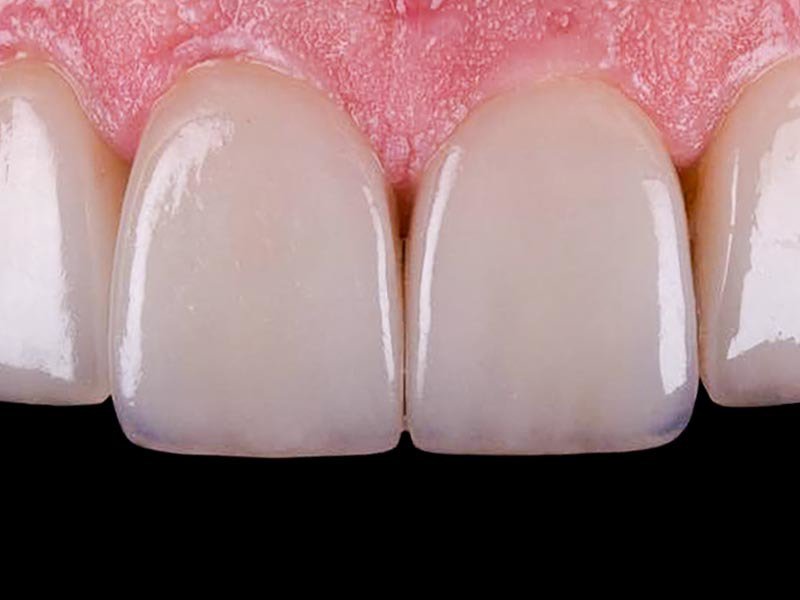
This is the question patients ask most. The short answer:
- Front teeth (smile line): E-max usually wins on looks — its translucency mimics natural enamel best.
- Back teeth & heavy bites: zirconia wins on strength and longevity.
- Grinders / bruxism: monolithic zirconia is the safer bet.
Many patients end up with a mix — E-max on the visible front teeth and zirconia further back. If a clinic insists on one material for every tooth without discussing your bite and smile line, treat that as a red flag.
Crown or veneer? Protect your teeth
The single most important decision in a smile makeover is crown vs veneer per tooth. A veneer preserves the tooth (0.3–0.7 mm of enamel removed); a crown removes 60–70% of the tooth structure. Crowns are the right call for damaged or root-treated teeth — but crowning healthy teeth unnecessarily is exactly how the infamous “Turkey teeth” results happen. Always ask for a written plan that states, tooth by tooth, whether it’s a veneer or a crown and why.
If the tooth needs endodontic care first, use our root canal treatment in Turkey cost and travel guide to separate the canal fee from the final restoration.
The process: how long crowns take in Turkey
- Day 1 – Assessment & design: X-ray, digital scan and shade matching; any decay or root canal treated first.
- Day 2–3 – Preparation: the tooth is minimally shaped and a fixed temporary crown fitted so you’re never without a tooth.
- Day 4–5 – Lab production: the in-house lab mills your zirconia/E-max crown while you enjoy the city.
- Day 6–7 – Fitting: the final crown is cemented, the bite checked, and your written guarantee handed over.
Crowns on implants take longer, as the implant must heal first — usually a second visit after 3–4 months. See our dental implants in Turkey guide for that timeline.
How long do crowns last, and are they guaranteed?
Zirconia and E-max crowns typically last 10–15 years with good hygiene; reputable Turkish clinics provide written guarantees of 5+ years. Longevity comes down to oral care, avoiding biting hard objects, and a night guard if you grind. The ceramics are the same Ivoclar-class materials used across Europe — you’re saving on the cost of delivery, not on quality.
If you have been advised to discuss grinding protection, see our Bodrum night-guard and fitting guide. A guard requires an individual assessment and does not guarantee that a crown can never fracture.
How to choose a crown clinic in Turkey — 5 checks
- Provider authorisation: independently check current authorisation and the treating clinician’s credentials; our review badge is not proof of either.
- A written, per-tooth plan from your X-ray — crown or veneer, and why — before you pay.
- Named materials with a written guarantee (E-max / Ivoclar / recognised zirconia).
- An in-house ceramic lab for one-trip treatment and on-the-spot adjustments.
- Strong cross-platform reviews — Google, Yandex, Trustpilot and WhatClinic shown side by side, which is exactly what every profile on our verified clinic list displays.
Frequently Asked Questions
How much do dental crowns cost in Turkey?
A zirconia or E-max crown costs €150–300 (about £130–260) per tooth in Turkey, versus £800–1,000 in the UK — a saving of around 75–80%. The price at a licensed clinic usually includes the digital scan, temporary crown and the final restoration.
Zirconia or E-max crown — which is better?
Neither is universally better; it depends on the tooth. E-max (lithium disilicate) is more translucent and looks most natural on front teeth. Monolithic zirconia is stronger and better for back teeth and heavy bites. A good clinic recommends per tooth — often E-max at the front and zirconia at the back.
How long do dental crowns from Turkey last?
Zirconia and E-max crowns typically last 10–15 years with good oral hygiene, and licensed Turkish clinics provide written guarantees, commonly 5+ years. The materials are the same Ivoclar-class ceramics used across Europe, so longevity depends on care, not the country.
What is the difference between a crown and a veneer?
A veneer is a thin shell bonded to the front of a tooth, removing only 0.3–0.7mm of enamel. A crown caps the whole tooth and removes 60–70% of the structure. Crowns are for damaged or root-treated teeth; veneers are for cosmetic changes on healthy teeth. Being crowned when a veneer would do is how the so-called “Turkey teeth” outcome happens.
Do I need a crown after a root canal?
Usually yes. A root-treated tooth becomes brittle and is normally protected with a crown to stop it fracturing. This is one case where a crown is the correct choice rather than a veneer, and a licensed clinic will explain why per tooth.
Is it safe to get dental crowns in Turkey?
Yes, at a Ministry of Health-authorized clinic using named ceramics (E-max, Ivoclar, recognised zirconia) with a written guarantee. The key is choosing a clinic that mixes crowns and veneers per tooth rather than crowning everything by default — check cross-platform reviews before you book.
Ready to compare real crown quotes? Browse verified clinics in Turkey with available public review data, estimate your cost with our price calculator, or read the full Turkey dental tourism FAQ. Free quotes with timing confirmed by the clinic.
More independent, free-to-cite research from GetClinicTurkey:
- Turkey Dental Tourism Statistics 2026 — costs, savings & top source countries
- Dental Cost Index — Turkey vs 10 countries
- Turkey Dental Tourism FAQ — 33 questions answered
- How We Verify Clinics — our clinic vetting process
Sources and editorial limits
American Dental Association: crowns. This reference supports patient research; it does not validate our directory prices, certify any listed clinic or medically review this article.
Listing-policy wording corrected on 20 September 2026. Read our review-badge criteria and limitations.