
Updated 29 August 2026 · GetClinicTurkey Editorial · General planning information, not personal medical advice.
Composite bonding in Turkey is often marketed as the “no-shave” alternative to veneers or crowns. Sometimes that is a fair description. Sometimes “bonding” is used loosely for a much larger composite veneer case, with whitening, contouring and bite changes hidden behind one package price.
The useful question is not whether bonding is cheap. It is whether direct composite is the right material, on the right teeth, in the right bite—and whether travelling abroad still makes financial sense once maintenance and repairs are included.
What is composite bonding?
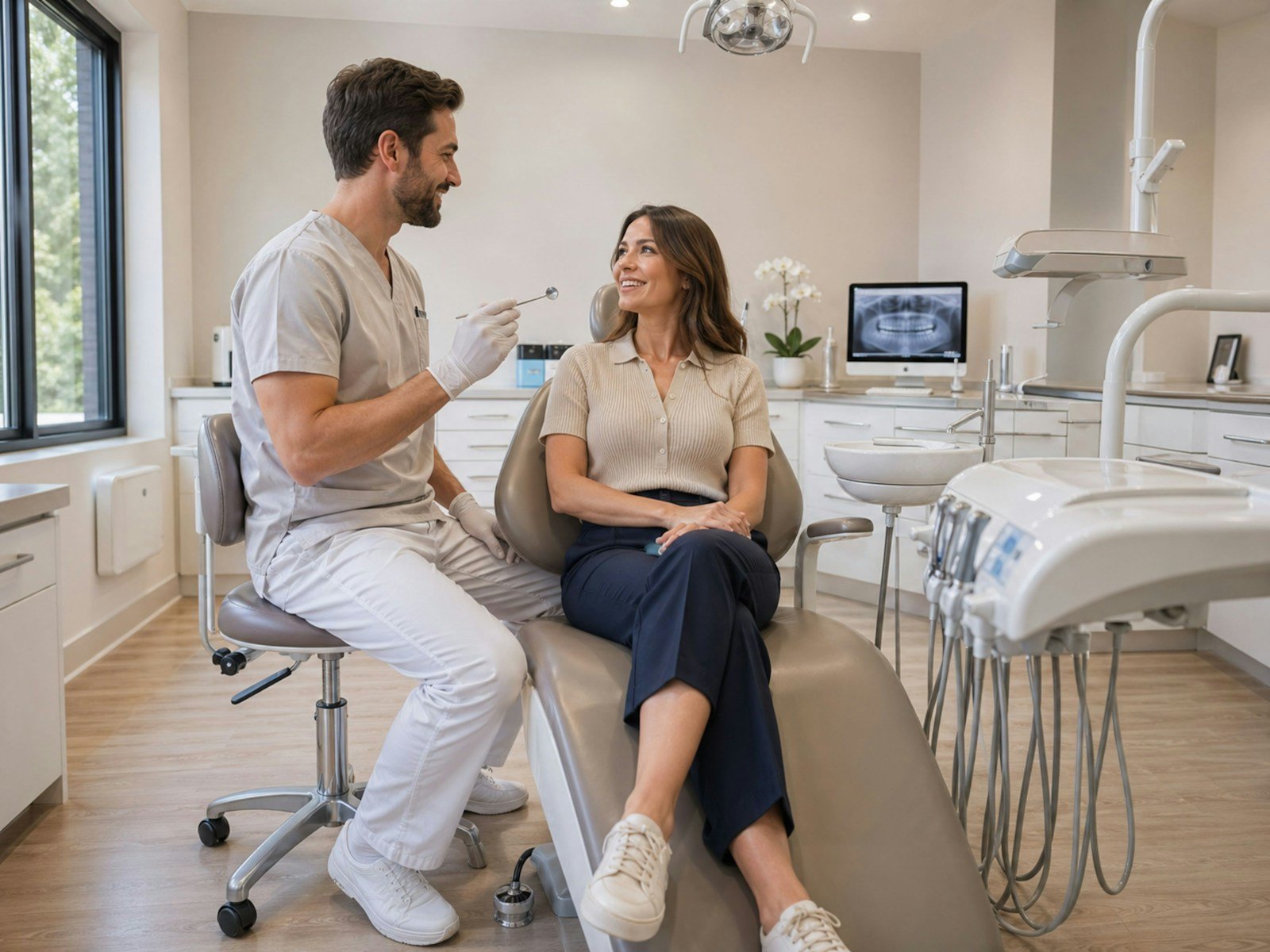
A dentist applies tooth-coloured resin directly to the tooth, shapes it and hardens it with a curing light. The material can rebuild a chipped edge, close a small gap, alter shape or restore localised wear. Bristol Dental School describes composite build-ups as tooth-coloured filling material used to improve appearance, restore function and protect remaining tooth structure.
That sounds simple, but the result is operator-sensitive. Shade selection, moisture control, surface preparation, layering, contact points, polishing and bite adjustment all affect appearance and longevity.
Edge bonding, composite veneer and white filling are not identical
| Label | What it may mean | Question to ask |
|---|---|---|
| Edge bonding | Resin added mainly to worn, chipped or uneven edges | Which edge and how much length will be added? |
| Composite bonding | A broad marketing term for direct resin reshaping | Which surfaces of each tooth will be covered? |
| Direct composite veneer | Resin covering much of the visible front surface | Is any enamel reduction planned? |
| Composite filling | Tooth-coloured restoration replacing diseased or lost structure | Is the goal disease treatment, appearance or both? |
Do not compare quotes until every clinic is quoting the same treatment. “Eight teeth bonding” can mean eight tiny edge additions at one clinic and eight full facial composite veneers at another.
Composite bonding Turkey cost in 2026
GetClinicTurkey uses a planning range of €80–150 per tooth. This is a comparison range, not a promise from every clinic. The total must rise consistently with the number of treated teeth:
| Number of teeth | 2026 Turkey planning total | Before travel, confirm |
|---|---|---|
| 1 tooth | €80–150 | Repair versus full-face coverage |
| 4 teeth | €320–600 | Symmetry, shade and bite |
| 6 teeth | €480–900 | Visible smile line and tooth-by-tooth design |
| 8 teeth | €640–1,200 | Whitening sequence and maintenance |
| 10 teeth | €800–1,500 | Whether all ten genuinely need treatment |
The arithmetic is deliberately transparent. A four-tooth package below €320 or a ten-tooth package below €800 falls beneath our current per-tooth planning floor and needs clarification.
What the quote may leave out
- examination, X-rays, scans and gum assessment;
- professional cleaning or gum treatment before bonding;
- whitening before the final composite shade is selected;
- diagnostic wax-up, mock-up or smile design;
- removal or repair of old fillings and bonding;
- night guard where the bite or bruxism justifies one;
- polishing, bite review and later repairs;
- hotel, flights, transfers and a changeable return ticket.
If whitening is genuinely indicated, our current Turkey planning figure is €120. Whitening natural teeth after bonding will not whiten the composite itself, so the sequence and shade plan matter.
Composite bonding vs porcelain veneers vs crowns
| Option | 2026 Turkey range | Main strength | Main trade-off |
|---|---|---|---|
| Composite bonding | €80–150/tooth | Often conservative and repairable | Can chip, stain, roughen or need maintenance |
| E-max veneer | €200–350/tooth | Laboratory-made ceramic aesthetics | Higher cost and irreversible preparation may be required |
| Zirconia crown | €150–300/tooth | Broader coverage for appropriately damaged teeth | Usually removes substantially more tooth structure |
A healthy tooth should not be crowned merely because the crown package is convenient. Read our detailed veneers versus crowns comparison before accepting a full-smile plan.
Who may be a good candidate?
After examination, a dentist may consider direct composite for:
- small chips or worn incisal edges;
- minor gaps or shape differences;
- localised wear where enough tooth structure remains;
- selected asymmetry or proportion changes;
- repair of an existing composite restoration;
- a conservative trial before more invasive treatment.
Bristol Dental School notes that composite build-ups can be useful for localised wear, while generalised or severe wear may require more complex planning. “I want whiter, straighter teeth” is a goal, not a diagnosis.
Who should pause before booking?
- Untreated decay or gum disease: cosmetic coverage does not remove the disease.
- Severe crowding or bite problems: orthodontics may address the cause more conservatively.
- Heavy grinding or clenching: bruxism increases restoration risk and needs a plan.
- Severe or generalised tooth wear: a few cosmetic additions may not restore function safely.
- Large existing restorations or fractures: some teeth may need a different restoration.
- Expecting permanent colour stability: composite can stain and does not whiten later.
How long does composite bonding last?
There is no single honest lifespan. A 2023 systematic review of resin composite laminate veneers found an 88% pooled survival rate across the included randomised trials, with mean follow-up periods ranging from 24 to 97 months. Surface roughness, colour mismatch and marginal discolouration were among the most reported complications.
That statistic should not be converted into “your bonding will last eight years.” The studies, restorations and patients differed. Tooth position, restoration size, technique, moisture control, bite, bruxism, diet and maintenance change the outcome. A long-term multicentre study of anterior composite build-ups also found chipping was the dominant failure mode, while many restorations could remain functional through repair.
Ask the clinic to separate three outcomes:
- survival: the restoration is still present;
- success: it remains acceptable without repair;
- maintenance: polishing, edge repair or replacement has been needed.
Can it be completed in one trip?
Direct composite does not normally require a dental laboratory to manufacture a ceramic restoration, so treatment can often be completed in one clinical phase. That does not make a rushed same-day package sensible.
| Stage | Purpose | Travel implication |
|---|---|---|
| Assessment | Teeth, gums, bite, photographs and alternatives | Final plan only after in-person examination |
| Pre-treatment | Cleaning, disease control or whitening if required | May change the advertised schedule |
| Mock-up/design | Agree length, shape and smile line | Do not approve from a filtered preview alone |
| Bonding | Isolation, resin placement, shaping and curing | Large cases can take substantial chair time |
| Review | Check speech, contacts, polish and bite | Keep a buffer day before departure |
A clinic that plans several teeth in one very short appointment should explain how isolation, contouring, finishing and bite checks remain controlled.
Maintenance after you return home
Composite’s repairability is a strength only if a dentist can identify the material, assess the bite and access the restoration. Before travelling, ask whether your dentist at home is willing to maintain work placed elsewhere. Bring home the treatment chart, tooth numbers, material brand and shade, photographs, invoices and aftercare instructions.
Expect routine hygiene and periodic polishing where clinically appropriate. Report a rough edge, changed bite, crack, pain or gum inflammation rather than waiting for the next trip. A guarantee that requires you to fly back for every repair may be worth less than it appears; read our dental guarantee and aftercare guide.
Is travelling to Turkey worth it for bonding?
For one or two teeth, often not on price alone. A local repair may cost more per tooth but remove flights, hotels, time off work and cross-border maintenance. For a genuine multi-tooth case, Turkey’s price difference can be meaningful—but the value disappears if unnecessary teeth are treated or repeated repairs require another flight.
Compare the whole-care cost: diagnosis, whitening, tooth count, protection, travel, adjustment time and likely maintenance. If the only reason to treat ten teeth is that the package makes ten look cheaper than four, choose the four teeth—or no treatment—if that is what the clinical plan supports.
Ten questions to send the clinic
- Which tooth numbers need treatment, and why?
- Is this edge bonding, partial coverage or a full direct composite veneer?
- Will any enamel be drilled, roughened or removed?
- Do I need gum treatment, orthodontics or whitening first?
- What composite brand and shade system will you use?
- How will you isolate the teeth and check the bite?
- Do you recommend a night guard, and why?
- How many appointments and review days are included?
- What polishing, repair and replacement are covered?
- What records and material details will I receive?
How to compare clinics
Do not choose from a before-and-after collage alone. Look for cases similar to your starting point, then verify that the images belong to the clinic and show the same patient in a normal before-to-after order. Ask who performed the treatment and whether the clinician regularly places direct anterior composite.
Use our Turkey clinic directory to build a shortlist, then apply the 12 checks to make before paying a deposit. Our Verified badge is a public-review threshold—not a medical endorsement—so the individual treatment plan still needs independent scrutiny.
The honest verdict
Composite bonding can be one of the more conservative ways to improve selected teeth. It can also become a high-maintenance full-smile coating when case selection is weak. The better plan is not automatically the whitest or the largest; it is the smallest predictable intervention that addresses the diagnosed problem.
Related guides
- Veneers vs crowns in Turkey: which do you actually need?
- Teeth whitening in Turkey: cost, types and limitations
- Clear aligners in Turkey: cost and travel reality
- How to check a Turkish dental clinic before a deposit
Frequently asked questions
How much is composite bonding in Turkey in 2026?
GetClinicTurkey's current planning range is €80–150 per tooth. That makes four teeth €320–600, six teeth €480–900, eight teeth €640–1,200 and ten teeth €800–1,500. These are comparison ranges, not quotes. Examination, whitening, old restoration removal, bite management, repairs, hotel and flights can change the real total.
Is composite bonding the same as composite veneers?
The terms overlap in marketing, but they can describe different amounts of coverage. Edge bonding may add resin only to a chipped or uneven edge, while a direct composite veneer covers much more of the visible front surface. Ask the dentist to mark the planned surface on every tooth.
Does composite bonding damage natural teeth?
Direct bonding can often be additive and conservative, but 'no drilling' is not guaranteed. Some cases need surface preparation, old restoration removal, contouring or bite adjustment. Ask exactly what enamel will be altered before consenting.
How long does composite bonding last?
There is no honest universal expiry date. Tooth position, bite, bruxism, the amount of resin, isolation, technique, diet and maintenance all matter. Chipping, roughness, colour mismatch and marginal staining may require polishing, repair or replacement over time.
Can composite bonding be completed in one trip to Turkey?
Direct bonding is commonly completed in one clinical phase, but the plan may include examination, hygiene treatment, whitening, mock-up, bonding and a bite review. Keep a practical adjustment day before flying home instead of booking the return flight immediately after treatment.
Is travelling to Turkey worth it for only one or two bonded teeth?
Often not on price alone. Flights, accommodation and future repairs can outweigh the saving on a small case. Travel becomes a more plausible comparison when several teeth genuinely need treatment or the trip already has another purpose, but clinical suitability still comes first.